
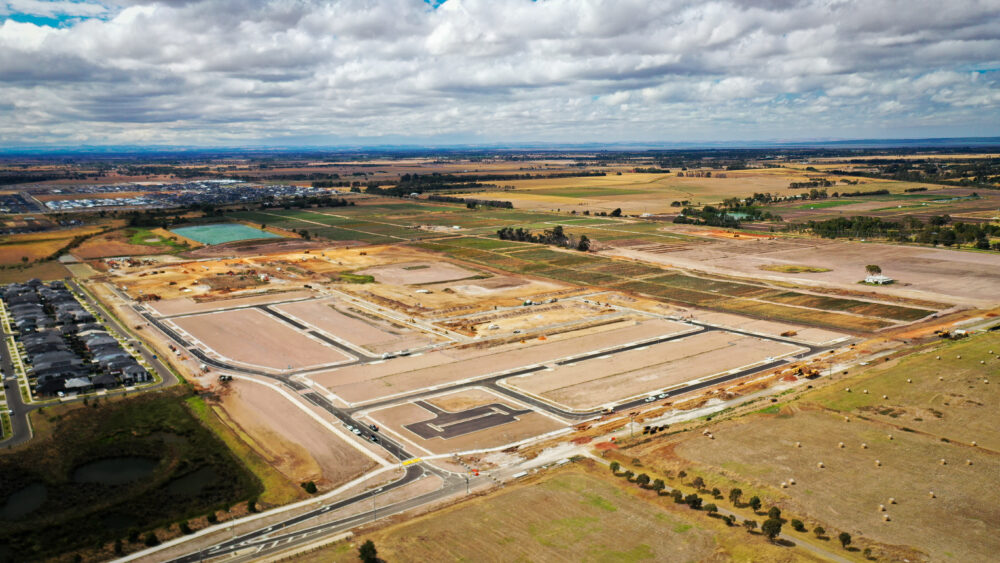
When you drive through one of Brown Property Group’s master planned communities, you see finished streets, engaging parks and open spaces, and ready-to-build house lots. But what goes into getting to a stage to that point? The answer is a carefully orchestrated series of infrastructure works that transforms raw land into a fully serviced residential community. Here is the ten-stop process:
Understanding stage delivery
Developing a stage in a master planned community is far more complex than simply clearing land and drawing lot lines. It requires coordination across multiple disciplines, adhering to the requirements of numerous regulatory bodies, and meticulous planning to ensure every home site is properly serviced and safe for residents.
At Brown Property Group, we have our own Civil team to deliver our stages. BPG Civil follow a proven methodology that ensures quality outcomes and timely delivery. Here’s how we do it.
The 10 steps to stage delivery
1. Earthworks: preparing the foundation
The first step begins with careful site preparation. We remove and stockpile topsoil, a valuable resource that will be reinstated later in the process. The land is then shaped and contoured to match detailed lot designs while ensuring drainage is directed to Melbourne Water standards. This foundational work sets the stage for everything that follows and determines the success of all subsequent works.
2. Sewers: essential sanitation services
Every home needs reliable sewage infrastructure. We construct all trunk and reticulation sewers, creating a comprehensive network that connects each house lot to the broader wastewater system. These underground pipes are installed to exacting standards and are critical to the health and safety of the future community.
3. Stormwater Drainage: protecting against flooding
Stormwater management is essential in Victoria’s climate. We install stormwater pipes and pits designed to drain water away from house lots and prevent flooding. Where required, our designs incorporate bioretention basins and wetlands that treat stormwater naturally before it enters local waterways, protecting the environment and managing runoff responsibly.
4. Water & Gas: connecting essential utilities
Water, recycled water, and gas services are installed in a carefully planned network of trunk and reticulation pipes. These systems ensure every house lot has access to essential utilities from day one, ready for connection when construction begins.
5. Retaining Walls: managing topography
Master planned communities often feature varying terrain. Where level changes require management, we construct retaining walls to create suitable building platforms for house construction. These structures are both functional and designed to integrate thoughtfully into the landscape.
6. Road Boxing and Base: building strong foundations
Roads are boxed out to their finished width, and service crossings are carefully installed to allow utilities to cross beneath the road surface. We then build a strong road base by densely compacting multiple layers of crushed rock. This foundation is critical as it supports the significant loads that roads must bear over their lifespan.
7. Road Kerb & Channel: managing water flow
Concrete kerbs are installed along road edges to manage water flow and guide stormwater runoff into the drainage network. This simple but essential infrastructure keeps water moving where it needs to go and helps maintain road surfaces.
8. Power & Telecommunications: connecting the community
Electricity, internet, and phone services are installed throughout the stage, with infrastructure ready for connection to each home. Street lighting is also installed, ensuring safe, well-lit streets for residents. In today’s world, robust telecommunications infrastructure is as essential as water and power.
9. Footpaths, Topsoil & Seeding: creating liveable Streets
Concrete footpaths are constructed to provide safe, accessible pedestrian routes to each lot. The topsoil we removed at the start is now reinstated in nature strips and parks, and the land is seeded with appropriate grasses and groundcovers. This step transforms the landscape from industrial construction site to residential streetscape.
10. Asphalt: the final touch
The final step is laying asphalt across the road surface, providing a smooth, durable driving surface for residents and visitors. It’s the visible completion of months of coordinated infrastructure work.
Quality and compliance throughout
Each of these ten steps is completed to rigorous standards and in compliance with planning approvals, Melbourne Water requirements, and local council regulations. Our teams work systematically to ensure quality at every stage, because we know that solid infrastructure is the foundation of thriving communities.
Why this matters
When you buy a house lot in a Brown Property Group masterplanned community, you’re investing in more than just land. You’re investing in infrastructure that’s been thoughtfully designed and expertly constructed. From stormwater management that protects the environment to utilities that are ready to connect, every element of stage delivery reflects our commitment to creating communities where families and businesses thrive.
The next time you drive through one of our communities, you’ll have a deeper appreciation for the work that made it possible.

